

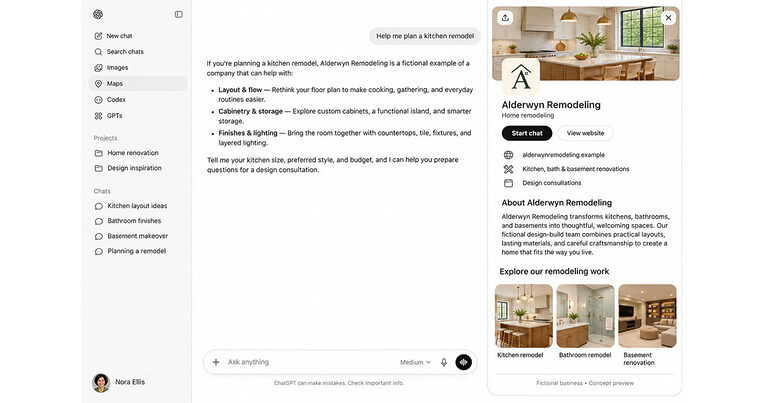
What Businesses in ChatGPT Means for Your Online Visibility
This feature has been available in beta since November 10th, and now you can claim your business on ChatGPT, the same way you claim it on Google. The verification process is not necessarily painless, but the access dashboard promises several benefits.
Verified businesses can manage business-related information and control how they are presented in ChatGPT. Only those who own or have permission to represent the business can manage the profile.
Here is how to start:
1) You’ll have to log in to your ChatGPT account.
2) Go to your Business Hub ( chatgpt.com/business-hub)
Click to find your business and select it from the drop-down list.

3) Once you locate the correct business, you will have two options for a verification method:
- Phone: Business Code by Text or Call
- Website domain verification: by adding a TXT record to your DNS.
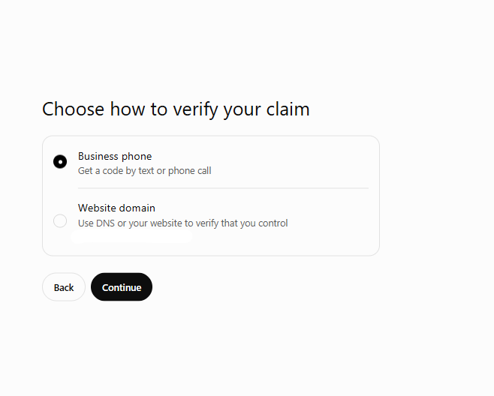
4) This will get you to the dashboard, and your business will be set to pending until verified. This process does not take long.
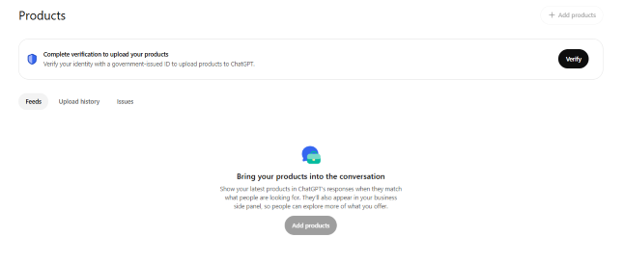
5) In order to make any edits to your business, you will need to complete the Persona identity check using a verified ID and biometrics.
Once approved, you will be able to manage business information and add features like agents and products.
What’s included in the Dashboard
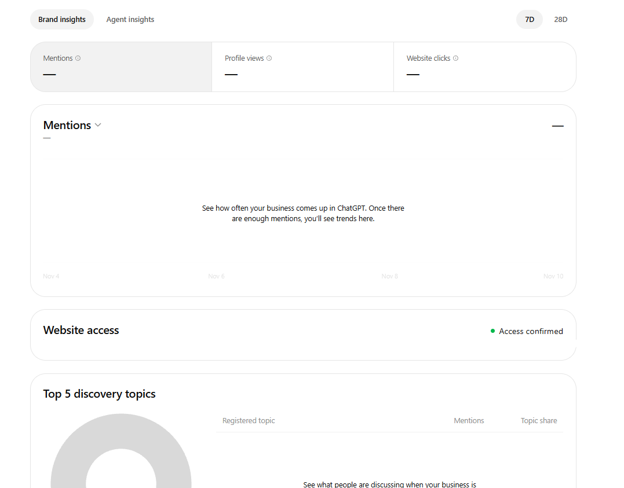
Business Hub provides insights into how people engage with your business inside of the ChatGPT platform. You will see mentions and discovery topics, profile views, and website clicks.
The Transition to Integrated Shopping
Retailers can also share product feeds with current pricing and availability. Shopify is one way to connect a catalog, but it is not required to participate. For those not on a Shopify platform you will be uploading a data feed (CSV, XML, JSON, etc). Eventually, this will be expanded to services offered (plumbing, accounting, consulting).
Build Your Business Agent
Once approved, your organization will be able to build and deploy a Business Agent that will carry on direct conversations inside of ChatGPT – answering questions about services, products, careers, and more. Customers can explore offerings through a conversation representing the business. Business verification alone does not guarantee eligibility for an agent.
Claiming a business does not guarantee better placement or sales. ChatGPT continues to make independent recommendations, and businesses may appear even without a Business Agent.
Our recommendation is to treat Business Hub as part of an ongoing SEO and generative engine optimization (GEO) strategy. A profile can provide business information, while your website supplies the detailed explanations and evidence prospective customers need to evaluate your company.
Take this opportunity to review the information customers will see across your online presence. Having clear and consistent descriptions of your services, up-to-date policies and helpful answers will be beneficial to the exposure and discovery process.
Read more here: https://openai.com/index/introducing-businesses-chatgpt/