

The more agents we implement for our clients and the more user feedback we collect, the more apparent it becomes that Agentic AI is the future of web use—not necessarily just because of the impact it will have on the web development process.
Understanding Agentic AI is necessary to fully grasp its capabilities and the true value the technology brings. For all the skeptics, the only thing I can say is that they are usually the group that has not had much exposure to it from a user perspective. That often creates a fear of the unknown that fuels a negative outlook. I am not referring to the environmental or political issues connected to this technology, but focusing simply on its capabilities and the benefits of ethical use.
Agentic AI is not just prompting an LLM to give you an answer. I consider it an ecosystem that can grow, improve, and fuel itself to produce better results for the end user. Businesses can leverage Agentic AI to improve client communication and create seamless support systems between the initial prompt, the answer, the resolution, and eventually, a record of the interaction.
Unlike generative AI, agents can perform autonomous actions and tasks, reducing the need for human interaction throughout the process. Their knowledge can be significantly more extensive than that of a single person or team of employees, and data retrieval is incredibly fast, making Agentic AI the perfect tool to support web interactions.
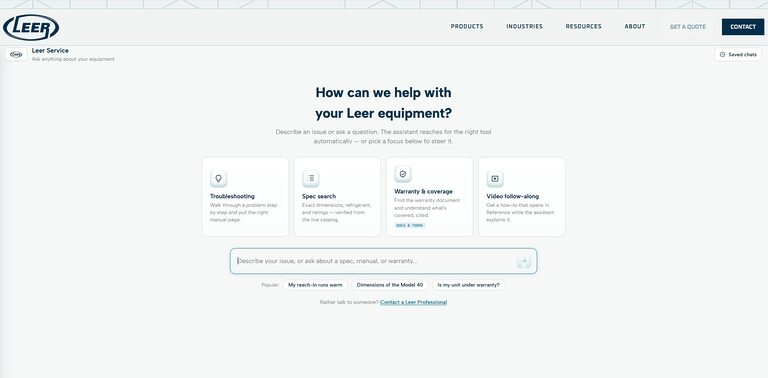
Browsing websites in the traditional way is nearly becoming a thing of the past. Going forward, the main navigation will be a single prompt window that serves as an all-in-one place to browse, purchase, request information, submit a form, and send a support request.
The website will still play an important role. Without it, businesses would become completely anonymous, and their digital presence would cease to exist. The information will still live on the website, but its primary purpose will increasingly be to serve as the source of information for agentic retrieval.
To better explain actual implementation cases, here are a few industries and examples of how Agentic AI will reshape websites and customer interactions.
Agentic AI for Financial and Legal Services
After working with hundreds of CPA, wealth management, and legal websites, we know that the primary user touchpoints that benefit the business most involve connecting users with experts in specific industries or service areas.
In a traditional search setting, the larger the business, the more complex information retrieval becomes through standard search and filtering. In comparison, Agentic AI can guide the user to the best possible CPA or attorney match, display that person’s information and expertise, and explain why the recommendation was made.
It can also deliver a form directly within the prompt window, route it to the appropriate employee, and record the lead in the CRM system through MCP. This is just one example, but while the agent does not offer financial or legal advice, it can guide the user to the correct website resources and make navigating the site seamless.
For both of these industries, compliance and governance are constant concerns. That is why AI agents can operate within closed-loop systems where retrieval is strictly controlled and happens only within approved parameters, without any need to reach outside of the RAG database.
Catalog and Ecommerce Websites Agentic AI Solutions
These websites probably showcase some of the largest benefits of Agentic AI, as everything from service and support to sales transactions can happen within a single prompt window.
AI agents can perform pre-sale conditioning, retrieve past orders to assist with returns and resolutions, and complete many of these actions autonomously without a human in the loop.
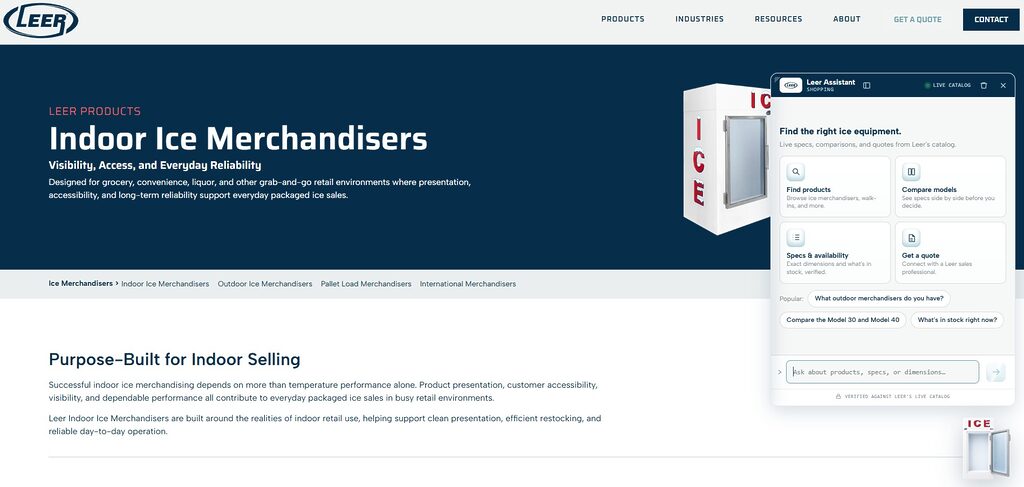
Here is a live example of a complex system that automatically routes information to either a support agent or a sales agent based on the user’s prompt.
Agentic AI in Real Estate
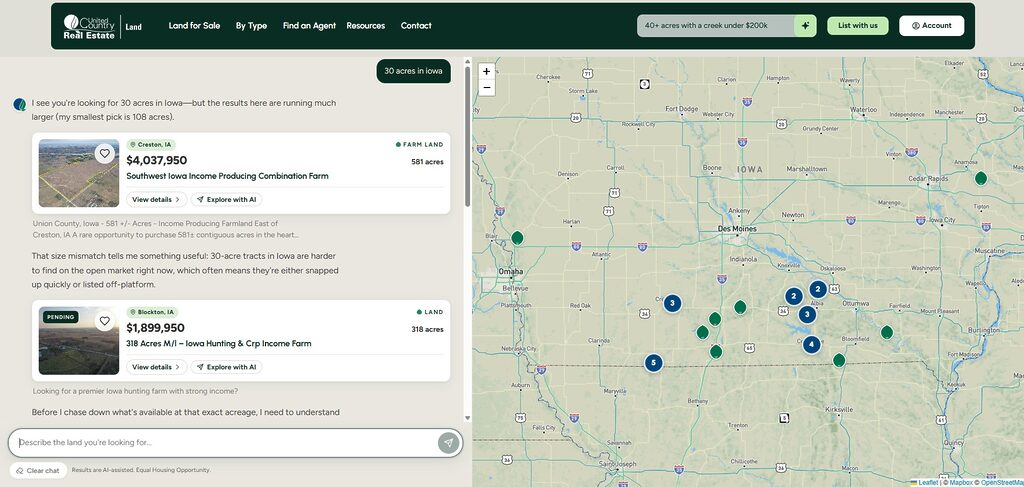
Agentic AI is a real game changer for real estate because the data associated with each property can be leveraged to deliver the best possible match for the user. It can also identify the strongest property from an investment perspective based on the user’s budget, location, and requirements.
Within a single prompt response, Agentic AI for real estate can build a portfolio of properties, rank them based on multiple features, compare them, and provide the user with honest guidance on the best long-term property solution.
Agentic AI on a website is no longer simply an option, but is quickly becoming a user expectation. Visit the link below to see how Agentic AI can be implemented in real estate.
Lion Tree Group has also been pioneering token-saving solutions that deliver high-quality functionality while leveraging model routing. The most expensive models are used only for the most complex interactions, while more affordable models perform simple information retrieval.
By adding additional layers that derive data directly from a website, we are able to offer some of the most efficient Agentic AI solutions on the market.